How to Cut the Cord and Dump Big Cable Forever

I have finally done it, America. After years of dreaming about this day, researching alternatives, and angrily threatening customer service representatives, I, for the first time in my adult life, have cut the cord and am free from big cable…free from oppressive contracts, hundreds of worthless channels, and lousy customer service.

Even better, at 1/3 the cost, I still have everything I loved about DirecTV. I watch live sports, record shows to watch later, and watch Game of Thrones when it airs and before some Internet dipshit can play spoiler.

But there’s more. Are you ready for the best news you’ve heard all day? Okay…in just two easy steps, you can have this too! If you’ve long endured the tyranny of big cable, let this guide free you from your shackles, nurse your wounds, and deliver you to the promised land. You’ll never look back.

Editor’s note: If you know big cable is awful and just want to cut some cord, then skip to step 1. But if, on the off chance, you awoke this morning and thought: You know, I’d like someone, using real-life examples and raw, uncaged passion, to illustrate the misery of life with big cable, then this next section is for you.

The Benefits of Being Cable Free

I am unsigned and unrestricted. Don’t ask me what a contract is because I don’t have a clue, nor do i know how it feels to pay one price in year 1…

how to cut the cord

…only to get fleeced in year 2.

how to cut the cord convo 2

Today, I sign nothing. I pay as I go and add or remove programming based on the season, when my favorite shows air, or just because I feel like it. This, my friends, is freedom.

I pay what is advertised. The most frustrating and terrible part of big cable’s frustrating and terrible pricing model is that you never know exactly how frustrating and terrible it is until you see the bill. Because while your standalone service may be, say, $69.99, after HD fees, and DVR fees, and multiple TV fees, and regional sports and broadcast fees — both of which are categorized as taxes, by the way — what you’re paying is a lot closer to, say, $169.99.

Now for those accustomed to DirecTV’s deceptive (and potentially illegal) pricing model, what I’m about to show you may be shocking. Here is a side by side comparison of the actual bill and the advertised price for my TV charges last month.

how to cut the cord

Would ya look at that. Balanced like grandma’s checkbook.

I am free from gaudy and impractical programming packages. The guy responsible for DirecTV’s programming has a seat reserved in hell…

Oh, you only watch ESPN and FX? Tough; we offer no fewer than 145 channels. You want NBC Sports? Pony up then, playboy, because you’ll need our Choice package. Oh, you want to watch It’s Always Sunny In Philadelphia? Well, fuck you; we exclude FXX from our 3 cheapest packages.

Yes, I still subscribe to predetermined programming packages, and yes there are some channels I do not watch and others I wish I had, but seriously you should see these options. They’re fantastic. Here, I’ll show you.

Step 1: Select Your Replacement Service(s)

How do you watch TV without cable? You stream it.

Recently, streaming services have evolved into a bonafide cable killer. Playstation Vue and Sling TV — newer, more cable-like cable alternatives — have joined traditional on demand services like Netflix and Hulu to give cord cutters plenty of firepower in the war with big cable.

But while each service is technically similar, understanding their differences is important when selecting what will be your primary source of television. Here’s your crash course:

Cut the cord

Playstation Vue, a Sony owned and Millennial Man recommended online video service, allows users to access live tv, on demand content, and a cloud-based DVR.

Vue was, without a doubt, the primary contributor in my decision to drop DirecTV. But before making the switch, I needed some questions answered. I have included them here to hopefully make your decision easier.

Do I need a Playstation game console to use Vue? No. Vue is available on a handful of streaming devices, which are covered in the next section.

Is a contract required? No. You pay monthly as you go.

How much does it cost? Packages begin at $30. More details below.

Is the interface easy to use? Yes. Vue features a guide similar to that of big cable, a search feature, and a menu bar containing your favorite and recently watched channels, recommended programming and ‘My Shows’.

How does the cloud-based DVR work? When you add a show to ‘My Shows’, any new episode is saved for up to 28 days after air date. So while you’re not hampered by storage space or recording conflicts, you are given a limited time to watch.

What is the recommended internet speed for using this service? Sony recommends 10 mbps.

Is there a loss of video quality compared to cable/satellite? Currently, maximum resolution is 720p, and while this isn’t full 1080p, I’ve never been able to see a difference between the two resolutions. I was more concerned with the choppy, laggy look that has plagued streaming video for years, and in this regard Vue passes the test, producing video quality that makes you forget you’re streaming.

I should mention that when watching hockey, the quintessential fast-moving sport, I noticed a minor stutter. Not a deal breaker, but I’d say the overall loss of quality (for hockey only) was about 5%. I didn’t expect Vue to produce superior video, and it doesn’t, but it did exceed my overall expectations.

Can I pause/rewind live TV? Yes, but with limits. I was able to pause the NBA playoffs for about 5 minutes before the feed started up again, enough time to take a leak or grab a beer, but you wouldn’t be able to pause for 20 and then fast forward through all the commercials.

Are there commercials? It depends. Since live TV is live TV, the commercial structure is no different than that of cable. ‘My Shows’ saved to the DVR contain commercials, but you are able to fast forward through them. For on demand programming, commercial structure varies. Example: In a 46 minute episode of The Americans, I counted 4 commercial breaks at around 1:25 each.

Am I allowed simultaneous streams? Yes, you are allowed to stream on 5 devices simultaneously, however, streams from Playstation 3 and Playstation 4 game consoles are each limited to only one. So if you’re watching the game on your PS4, any additional stream must come from a PS3 or other compatible device.

Are there any other restrictions? Yes, the most significant being that your service is anchored to your home location. So while you can watch on your game console and streaming and mobile devices, you must be connected through your IP address to have access. This prohibits you from sharing your password, watching ESPN on your iPhone in the office, or bringing your game console over to your buddy’s.

Can I watch local sports? Vue offers a variety of sports programming, but availability depends on your location. In Minneapolis, the basic package includes NBC Sports and 2 Fox Sports stations. For $5 more per month, the middle package includes 2 Fox regional sports stations, so I can watch the Wild or Twins during hockey/baseball season.

Do I get local channels? Again, it depends on your location. If you live in Chicago, Dallas, LA, Miami, NYC, Philadelphia or San Francisco, you have access to all programming. The rest of us can purchase ‘slim’ packages at a $10 discount with one major difference: no live broadcast of ABC or NBC. Instead, these networks offer only a handful of on demand programs.

You cannot choose between the standard and slim versions; availability is dictated by your zip code. And while this might be a bummer for some, others will prefer to save the $10 and receive NBC and ABC for free via an HD antenna — more on that shortly.

What are the programming options? Both the standard and slim packages are available in 3 tiers; Access, Core, and Elite. Slim packages begin at $29.99 and a $10 premium is added for standard.

how-to-cut-the-cord

how-to-cut-the-cord-access

how-to-cut-the-cord-core

How-to-cut-the-cord-elite

Playstation Vue Recap

Pros

  • Cheap, practical packages starting at $30
  • No hidden fees or annual contracts
  • Premier non-cable option for live and local sports
  • A variety of ways to watch — live, on demand, DVR

Cons

  • Shows saved to the DVR are available for only 28 days after air date
  • On demand shows are available for varying amounts of time
  • In most markets NBC and ABC are unavailable
  • Minor loss of video quality for some programs

cut the cord

Sling TV. Starting at $20 per month Sling TV is a cheaper, albeit stripped down alternative to Playstation Vue. With the monthly savings of $10, you sacrifice DVR capabilities and a lot of quality stations.


What are the programming options? Sling TV is available in three packages:

1. Sling Orange – A single stream package offering 25 plus channels for $20.

Cut The Cord

2. Sling Blue – A multi-stream package offering 40 plus channels for $25.

Cut The Cord

3. Sling Orange & Blue – A multi-stream combo of both packages for $40.

Cut The Cord

Recap

While Sling Orange offers access to live sports on ESPN, the rest of the channel lineup leaves a bit to be desired. Sports fans will also notice that ESPN is absent from the Blue package, meaning that anyone looking for both ESPN and regional Fox Sports networks will have to subscribe to the $40 package.

Pros

  • Cheap, cable-like alternative
  • Ability to watch ESPN live
  • Mobile viewing outside the home
  • Some on demand programming

Cons

  • No DVR
  • Channel lineup leaves a bit to be desired
  • Regional sports stations and ESPN aren’t available in the same package

Netflix, Hulu, and Amazon Video

While the three most popular on demand streaming services are all easy to use, similarly priced, available on multiple devices, and fill the same general niche, differences in programming and when/how programming becomes available is good enough reason to think twice before selecting a service.

Netflix

Pros

  • Commercial free
  • Binge watchers can purge on a variety of entire seasons
  • Quality original content like House of Cards and Orange is the New Black

Cons

  • Shows often aren’t available until a season after air date
  • Basic plan is standard definition

Membership options

how to cut the cord


Hulu

If you’re looking to catch up on current seasons, Hulu is your best bet. Hulu, a joint venture owned in-part by ABC, NBC, and FOX, offers next day availability for tons of big network programming.

While availability varies, as a whole, shows appear on Hulu much sooner than they do on Netflix, and Hulu is transparent with show specific guidelines.

how to cut the cord

how to cut the cord

Pros

  • Next day availability
  • Especially great for ABC, NBC, and FOX programming

Cons

  • No simultaneous streaming
  • Base package contains commercials

Membership options

how to cut the cord


Amazon Video

Spending over $3 billion on content in 2015, Amazon is serious about its streaming service. The company also secured exclusive rights to the HBO archive, with seasons of current shows arriving three years after the original air date. And just this year, Amazon began offering video as a standalone service, separate from Prime and available to monthly subscribers.

Pros

  • Commercial free
  • Growing library of prime exclusives
  • Allows up to 2 simultaneous streams, unless it’s the same title
  • Access to HBO’s archives

Cons

  • Shows aren’t available until months after air date

Membership options

how to cut the cord


HBO Now

It used to be that I needed a cable subscription in order to watch my favorite Game of Thrones characters get slaughtered by my least favorites. But with HBO Now, not only can I watch when it airs, but I have on demand access to the HBO archives, all for $14.99 per month and without contract.

Pros

  • Commercial free access to HBO programming when it airs
  • Full access to the HBO archives
  • Allows simultaneous streaming as long as it’s not the same episode

Streaming Services Recap

Here is a summary — by basic plan — of each service provider.

how to cut the cord streaming options

Step 2: Select Your Streaming Device

With your streaming services selected, all that separates you from big cable independence is a compatible streaming device.

If you want a recommendation, get the Amazon Fire Stick. It’s cheap, easy to use, compatible with every service we’ve covered, and offers quick access to Prime’s movie rental library.

how to cut the cord

If you already own a device, our ultra-handy compatibility grid will show you compatible services. And should you need an HD antenna to get local channels alongside, say, a Playstation Vue subscription, links to the antenna and other devices can be found below. Happy streaming!

how-to-cut-the-cord-streaming-devices

*not compatible with Xbox 360

HD Antenna

I purchased this HD antenna to get NBC and ABC alongside my PS Vue subscription, and while antenna technology seems incredibly outdated, the picture is just as good as the one I received with DirecTV. However, picture quality will depend on the distance between your antenna and the nearest broadcast tower.

how to cut the cord hd antenna

Other Devices

Click below to see or purchase any of the following streaming devices.

Roku Stick

Playstation 4

Xbox One

Apple TV


Note: The Millennial Man participates in the Amazon affiliate program. Basically, if you purchase a product or service through a link on this site, we get a small percentage — compensation that covers a fraction of the cost and effort required to maintain this blog. Your support is very much appreciated.

Childbirth: The Survival Guide for First Time Fathers

I was never confident in my ability to just ‘be cool’ while my wife gave birth to an entire child, so for the sake of remaining upright in the delivery room, I decided the anatomy of birth was better left unknown. I avoided videos, skipped labor chapters in baby books, and entered the hospital with no expectations regarding blood or pain or placentas. When it came to birth…ignorance was bliss. And this, in hindsight, was just the worst goddamn approach.

Because when labor started, and contractions disabled my wife’s ability to speak, and the medical people—now flying in and out of the delivery room—started talking about broken water and bloody show, I, balls deep in the most momentous moment of my entire existence, just sat there like some horse’s ass.

The lesson here? Know your stuff. When your partner is in early labor, know how to relieve her discomfort. As labor intensifies, know when to leave for the hospital. Most importantly, childbirth is controlled by a woman’s hormones, which can either thrive or falter based on the surrounding environment, so know how to create the right environment. How many baby books and birth classes will you have to endure to learn all this stuff? Zero. It’s all right here.

Birth: The 2 Minute Anatomy Lesson

For the average guy, interest in female anatomy begins and ends with where he sticks his wiener. But for the soon-to-be father, knowledge must penetrate a little deeper, and here’s why: medical people use labor lingo like you and your buddies use dude and fuck. Without a basic understanding of the pieces, process and terminology, you’ll have no idea what is happening. Consider this your crash course—everything you need, and nothing you don’t.

The Organs

Childbirth for Dads

Uterus (womb)
The uterus or womb is a hollow muscular organ that houses the fetus during pregnancy. As seen above, it has 2 parts; the body and the cervix.

Before conception, the body is the size and shape of a pear. It then expands with the growing fetus, and by full term, reaches the size of a goddamn watermelon! The walls of the uterus contain a muscle that is—depending on your definition of strength—the strongest in the human body and responsible for contractions during labor. Safely inside the womb is the amniotic sac, a membrane that contains the fetus and amniotic fluid. This fluid protects the fetus and provides lubrication to prevent his body parts from growing together.

Cervix
Below the body, in the lower region of the uterus, is the cervix—a cylinder-shaped pack of tissue covered cartilage that connects the body to the vagina. Think of the cervix as the baby’s gatekeeper. During pregnancy, it remains hard and closed to contain the 11 pounds worth of fetus and fluids. Then as labor begins and progresses, it effaces (softens) and dilates (opens), preparing for delivery.

The status of the cervix offers the single best estimate as to the arrival of the baby and is therefore continually monitored. Beginning in the final weeks of pregnancy and throughout the entirety of labor, the cervix will be poked, prodded, and assessed.

Vagina (birth canal)
The vagina is a multi-purpose organ, and for this purpose—giving birth—it is often referred to as the birth canal. Joined in the back by the cervix, the vagina stretches to many times its normal size as the fetus passes through and into the real world, completing his transformation into a breathing, eating, never sleeping baby.

Placenta
The lifeline of the fetus, the placenta does the work of the lungs, heart and digestive system while these organs develop. Attached to the uterine wall, the placenta delivers oxygen and nutrients from the mother’s blood through the umbilical cord to the baby.

The Terminology

childbirth for dads

Cervical effacement (aka thinning, softening, or ripening)
As labor approaches, hormones called prostaglandins transform the cervix from hard and inflexible to soft and stretchy—picture the consistency of your nose vs that of your lip. Effacement is measured in percentages. For example, a doctor may determine the cervix is 50% effaced, or halfway between not effaced and fully effaced.

Cervical dilation
As the cervix softens, it is able to dilate, creating a passage from the womb to the birth canal. Dilation is measured in centimeters, ranging from 0 (not dilated) to 10 (fully dilated).

Mucous plug
During pregnancy, the opening of the cervix is plugged with mucus, which protects the womb from outside infection. As the cervix dilates, this plug is dislodged and can pass through the vagina and, say, into a toilet. Its passing isn’t necessarily a sign that labor has started, but that it will start soon—usually within a few days.

Bloody show
Bloody show is a blood-tinged mucous plug. Because the blood is a result of ruptured capillaries in a dilating and effacing cervix, it is a sign that labor is underway.

Contractions
The tightening and relaxing of the uterine muscle, contractions push the fetus from the womb out into the real world.

Water breaking
Contractions, pressure from the descending fetus, or both cause the amniotic sac to rupture, sending a rush or slow trickle of amniotic fluid out of the womb. Most of the time (85%), labor precedes broken water. In almost all other cases, labor will begin within 24 hours. Regardless, broken water warrants a call to the doctor, because the fetus is no longer protected by the amniotic sac.

The Process: A 5 Step Guide to Birth

Nobody knows exactly how labor starts, but it’s believed that the fetus sends a message to the mother, informing her he’s ready for life outside the womb. From there, hormones trigger cervical effacement and contractions in the uterus.

Labor then progresses through 3 phases (early, active and transitional). Once the cervix dilates to 10cm, it’s time for pushing and delivery. After delivery of both the baby and placenta, your new family will be sent to postpartum for exams, monitoring, and other administrative items.

So, uh, how long does all this take?
Since no two births are the same, tying the process to a single timeline is often misleading—early labor alone can last several hours or several weeks, and both would be considered normal. But if your partner has the average birth for a first time mom, then your experience will look just like this:

Childbirth for Dads

The Many Roles of the Ultimate Labor Dad

If you’ve ever wondered how the female body can deliver an 8 pound baby, the short answer is it can’t—not without the hormones that promote labor. These hormones (oxytocin and endorphins) flourish in environments of relaxation, safety, and support. In a stressful or tense environment, however, the body produces adrenaline, which can impede labor and even cause complications.

Your role during childbirth is to create this tranquil environment, and the best way to do that is with preparation. Here’s what to expect and how to respond during each stage of the process.

Early Labor

Most often, early labor occurs at home. Use this time to a) help your wife relax—she’ll need the energy, and b) get things ready for the hospital.

Get ready. If you read our post on pregnancy, then you’re already packed. Nice job! If not, late is better than never, so install the car seat (baby legally can’t come home without one), and of equal importance, prepare your survival kit.

Childbirth for Dads

Know when to go: The 5-1-1 rule. First, know to call the doctor immediately if your partner experiences:

  • Broken water
  • Bright red bleeding or discharge
  • Decreased fetal movement

Hopefully, and most likely, things will go smoothly, and you can follow your doctor’s instructions regarding when to call or come in—standard protocol being the 5-1-1 rule, or when contractions are 5 minutes apart, 1 minute in duration, and have been this way for 1 hour. Simple enough…assuming you know how to time contractions.

Time and record contractions. The life of a contraction is as follows: begins, increases in intensity, peaks, then subsides completely before the start of the next one.

  • Duration is measured from beginning to end. The length of the contraction below is 1 minute.
  • The time between contractions is measured from beginning of contraction 1 to the beginning of contraction 2. The time between contractions below is 5 minutes.

Childbirth for dads

Early contractions will likely be 10-20 minutes apart, so don’t go overboard with the timer. If you—armed with a stopwatch—are continually in the face of a laboring woman, you might not live to see your child. Start with once an hour or so, and in the meantime…

Be a distraction. In a good way. Watch a movie, play Connect Four, take a walk. Do anything besides sit and stew on the fact that you’re literally having a baby.

Eat. This might be your last chance. This is also a good time for your partner to have a small snack (crackers, toast, cereal) IF her doctor says it’s okay to do so—the rules of eating during early labor vary by medical professional.

Know pain management techniques. While early contractions won’t take the breath away, they are uncomfortable. Here are 3 basic techniques for relief during early labor.

Apply counter pressure. Many women experience back labor caused by the baby’s head pressing against the pelvis. Applying pressure to the lower back can offer relief. Try tennis balls or the heels of your hand, and use a circular motion.

Suggest a position change. Doing so can relieve pressure from the descending fetus. Have her lie on her side with pillows between her legs, sit backwards on a chair like AC Slater, or get down on her hands and knees.

Alternate hot and cold. Have heat and ice packs on hand.

Active and Transitional Labor

Your role in the final stages of labor will depend on the birth plan. If your partner elects for a natural birth, learn about breathing and advanced pain management techniques commonly covered in birthing classes. If she elects to take pain relief like an epidural, the breathing methods commonly seen in movies won’t apply. My wife opted for an epidural, so some of this section is written from that experience.

Prepare for check in. Many hospitals now permit pre-registration, allowing you to complete a portion of the paperwork prior to arriving for delivery. If offered, certainly do this, because the less administrative bullshit required of a laboring woman, the better life is for everyone. Still, upon arrival, expect someone from the hospital to:

  • Issue ID bracelets
  • Ask you to sign some consent forms
  • Show you to your room
  • Give your wife a hospital gown
  • Examine her cervix
  • Start an IV (not all the time but often)
  • Discuss pain medication
  • Hook up the fetal monitor

Ask how to read the fetal monitor. Most hospitals use a fetal monitor—a device resembling a Power Ranger belt, which wraps around your partner’s belly and measures both fetal heart rate and contractions. The readings are then displayed on a monitor and printed on continuous feed paper.

Either by (poor) design or coincidence—maybe a nurse was out sick—I was in charge of reading the fetal monitor during my wife’s delivery. This was a big deal because, as is often the case with an epidural, she couldn’t feel her contractions. So as the monitor spiked I would say something like DURRRR get ready to push honey. Then she’d push, and I’d count 1-2-3-4-5-and-relax. Then the midwives and I would all hoot and holler and congratulate my wife on a great push.

Anyway, the more you understand, the more useful you can be, and the more useful you can be, the better you will feel.

Set the Mood. Once you get settled:

  • Dim the lights.
  • Control room temperature
  • Massage your partner’s hands and feet
  • Play some slow jams. Research shows that music decreases anxiety, in some cases more effectively than anti-anxiety medication. Seriously, Bose Soundlink Mini wins labor and delivery MVP. If you’re waiting to pull the trigger on a Bluetooth speaker, now is the time.
  • Just be there. Hold her hand, look her in the eye, tell her everything is fine, and goddammit, you both are in this together.

Roll with the punches. The final stages of labor are intense and nerve-racking as your partner prepares—physically and emotionally—to deliver this baby. This is also when labor might start to get the best of her, so be flexible and don’t take it personally if one minute she’s asking that you rub her back and the next that you BACK THE FUCK OFF.

Update those who need updating. If you need to send one last update, do so now. Because with the cervix fully dilated to 10cm and the baby descended into position, it’s time for…

Pushing

What surprised me most about pushing was the synergy. It was nothing like the frantic fiasco I imagined. There was counting and resting and coordination as mom and contraction bore down together. The additional nurses who arrived for the main event each had a role. I had a role. The medical people will take the lead, so follow it, but be ready to assume the following responsibilities:

Contraction notifier. Using your newfound knowledge of the fetal monitor, as that little line starts to climb uphill, signalling a contraction, notify your wife so she can prepare to push.

Body part holder. If you’ve ever seen a dog take a shit, then you’re aware of the coordination involved. Every muscle from head to tail aligns and contracts so Spot can dump and get back to chasing squirrels.

The midwives continually instructed me to pull my wife’s legs and push on her back—like I was folding her in half—so she could bear down and ‘wrap around the baby’. I imagine this is the same efficiency of that in the shitting dog. It was hard work rolling my wife into prime pushing position, which makes it the perfect job for the strapping labor dad.

Encouraging progress updater. Because your wife is focused on pushing and isn’t best positioned to see the action, update her on the progress. When you see the head, tell her. Help her visualize the baby, and then stick that visualization in front of her like a rabbit at the race track. Eventually—in what is sure to be one of the most fucked up visuals of your very existence—the tiny, hairy baby skull will appear from the vagina (or crown), and delivery is imminent.

Delivery

Once the head is out, the doctor will likely halt the process to clear the mucus from your half-born baby’s nose and mouth. Then with one final guided push, the baby (and so much fluid) will burst from the vagina like the end of a water slide. You are now officially a father…congratulations and holy shit. Here’s how to deal:

Expect a newborn. I have never anticipated anything like the first sight of my child. I spent so much of the pregnancy imagining her appearance that—by the time the girl was born—she was almost mythical. Try not to do this, because a newborn isn’t pretty. Expect the following:

  • Swollen face and genitals
  • Cone-shaped head
  • Pink or gray skin tone—pigmentation doesn’t show up until after birth
  • A lot of vernix—a cottage cheese-like substance that protected baby in the womb

Know there is no right way to feel. 25-40% of new fathers report feelings of indifference after the birth of their child, while other dads cry tears of joy in the delivery room. This is a major life event. You’ll respond in your own way, and that’s okay.

Cut the umbilical cord. As soon as the baby is born, the doctor will clamp the umbilical cord and hand Jr. to your wife for skin to skin contact—this calms baby and regulates body temperature and heart rate. After a minute, you’ll have the opportunity to cut the cord, which has a consistency unlike anything you’ve ever experienced. Then baby is handed back to the staff where they will do the following:

  • Assign an Apgar score based on an assessment of baby’s condition (appearance, pulse, reflex, tone, and respiration).
  • Issue a matching ID band to prevent you going home with some random-ass baby.
  • Measure height, weight, and head circumference.
  • Apply eye ointment to prevent infection.
  • Return baby to your wife as she prepares to deliver the placenta.

Prepare for the placenta. Anywhere from 5 to about 30 minutes after delivery of the baby, the placenta will detach from the uterine wall and descend through the birth canal. Once delivered, it will be examined—enthusiastically in some cases. The resident who analyzed my daughter’s ran over to show me the thing like he had just used it to win a science fair. It’s appearance was shocking, by the way, and most closely resembled that of a jellyfish having just been tossed from atop the Empire State Building. Be ready for it.

Anyway, now that your partner has completed both of her deliveries, she will be inspected and stitched (if necessary). Then the cleaning crew will come in and whisk away the fluids and bloody bedding, and within 10 minutes, it will look like nothing ever happened. Then you’ll pack your shit and your newly established family and head to the postpartum floor.

Postpartum

The main event is over, but your hospital adventure has just begun. Thanks to the 1996 Newborns’ Act, which mandates insurance agencies cover postpartum care for at least 48 hours after childbirth, you’re likely 2 days away from being home.

Now, it may be sooner—the average stay is 40 hours—but research shows that being discharged prior to 48 hours increases the risk of rehospitalization. Besides, there’s a lot to do and even more you’re gonna want to learn before you become the (oh god) primary caregiver.

Ask an insane amount of questions. The postpartum nurses spend entire days caring for newborns and recovering mothers. Additionally, most are experts on breastfeeding, which you’re about to discover is maybe the most frustrating aspect of newborn care. Who better to learn from than the pros? Watch and take notes as they swaddle, dress, and change baby. Here is a checklist of skills to acquire before discharge:

  • Changing
  • Burping
  • Swaddling
  • Dressing
  • Sponge bathing
  • Feeding and basic troubleshooting

Regulate visitors. Childbirth is a lot of things (emotional, exhausting, bloody). One thing it is not, however, is something I’d like to share with a shit ton of visitors. The room is small, your wife is recovering, your baby is adjusting, and the medical people are in and out constantly—all valid reasons to postpone visits until you get home.

Keep your wife comfortable. The hospital staff will assist with her recovery, but you can help with physical tasks like retrieving baby for feedings.

Let baby room-in. Years ago, babies stayed in a nursery while their mothers recovered in postpartum. You’ve probably seen the cartoons of a young couple staring through the window of a room lined with babies in bassinets—that’s the nursery.

Recent research, however, shows that the mom and baby who stay together (or room-in) in the days after delivery have an easier time breastfeeding and bonding. As a result, many hospitals now encourage rooming-in, while some have eliminated the nursery option altogether.

You, too, can bond. You don’t need boobs to bond with your baby. In fact, many studies show that a new father is just as nurturing as his partner. And even if you’re not a natural nurturer, bonding with a newborn is easy. The key? Take off your shirt and snuggle up. Skin to skin contact comforts baby, familiarizes him with your scent, and can help regulate his heart rate, breathing, and temperature.

Bring baby to his screenings. While chances are slim, some babies are born with life-threatening conditions that, without a screening, could go undetected. Because early intervention is critical in maximizing long term potential, all 50 states require some sort of newborn screening, including exams for hearing loss, congenital heart disease, and blood tests for approximately 50 other conditions.

Complete a few final administrative items.

  1. Complete paperwork for a birth certificate.
  2. Request a social security card.
  3. Schedule baby’s first well-child visit with his pediatrician—typically 48 hours from discharge.

Enjoy the experience. The birth of your first child is a major milestone, so enjoy it. Because once you buckle that car seat and exit the hospital parking lot…you’re on your own. Welcome to The First Week of Fatherhood.

What Nobody Tells You About Fatherhood: 12 Confessions From A Brand New Dad

So you’re thinking hard about having a kid?

Good for you. That’s a very mature and dad-like thing to do. Decision making is an important part of fatherhood. When it’s 4AM on some random Tuesday and your screaming child has slept for 6 of the last 600 possible minutes, a good decision can be the difference between a dad who goes to work tired and one who ends up on the news.

Before the girl was born, I had heard enough horror stories to know that fatherhood changes a man. Now that she is here, however, I realize that while new dads freely share tales of sleep deprivation and baby poop, discussing the REAL challenges of fatherhood is more taboo.

A baby stirs up emotions and feelings, so the unwillingness to talk about it isn’t surprising. But it is unfortunate, because a lot of soon-to-be dads are entirely oblivious to just what in the hell is coming. What follows is everything I wish I knew before baby: 12 confessions from a brand new, worn out, but still sane (and still married) father.

I am Emotionally Unstable

I thought I was done with emotions, that I had outgrown them like Ninja Turtles and bed wetting. Men are supposed to be unflappable, so for years I buried all that emotional shit deeeeep down inside. And there it has stayed. But now it is back. And I’m handling it poorly.

The girl gets shots, and I’m as hysterical as she is.

She WILL NOT fall asleep, and I want to put my foot through her bedroom wall.

She recognizes me for the first time and smiles, and I break down and fuckin weep, because I’ve lived 29 years without ever experiencing this emotion, and my brain cannot compute the appropriate response to just what in the hell is happening to me.

Of all the changes, becoming an emotional train wreck was the least expected. I had no idea I could feel so strongly, which is awesome but also terrifying, because now I worry.

Oh, How I Worry

The girl had reflux (colic on steroids) and torticollis (a crooked head due to a constricted neck muscle), both of which are surprisingly common and 100% curable/outgrowable.

Still, my wife and I spent the first 5 months of parenthood OBSESSING over these symptoms. And while babies are diagnosed every day with worse and often heartbreaking conditions, I know the panic that arises when things are not perfect.

A terrifying realization that every dad makes, and one I wish I had made earlier, is that you control very little. The rest is up to fate, or God, or chance, or the universe, or whatever you want to pin it on.

Could your baby have a currently undetectable and eventually inoperable disease? Of course. But so could you. Just like you could drop dead from an aneurysm upon finishing this sentence…

Caution and diligence are different than hobby worrying. If you can’t make the distinction, you’re in for a loooong rest of your life.

My Marriage Has Never Been Harder

Just look at this fuckin chart, man.

marital-unhappiness-chart

Pre-child, I cannot remember the last time I argued with my wife. In fact, I don’t think we ever had a real argument. But fun time is over, because three years of harmonious coexistence is apparently no match for a mini human who eats every hour and shits on the half hour in between.

You will need to take some night shifts. You will need to miss some football games. You will need to compromise. You will need to take a breath and let that snide remark slide right off your back. You need to find a way, because love alone will not.

I Wonder if My Wife Will Ever Be the Same

You think life as a new dad is one of hardship and sacrifice? Wait until you witness life as a new mom. While you may lose some sleep and free time, you — the person — remains intact.

Your wife, however, experiences hormonal and physical changes that alter her very being, like some monster strapped to the table of a mad scientist.

The role of a new mother…it is admirable, man. It’s emotional hijacking, nipple cracking, stomach stretching work that will make you pause, reflect, and say to yourself, Christ, I have spent a lifetime underappreciating my mother.

Christ, I Have Spent A Lifetime Underappreciating My mother

Go call your mother. She loves you.

Sometimes I Miss My Old Life

Life with a baby is full of tiny events that are a giant fuckin deal. The girl rolled over. She grabbed her feet. OMFG she laughed at the dog!

Mundane milestones mean THE WORLD when you’re a parent. The day the girl fed herself with a spoon, I snapped 200 pictures and then about shit myself in wonderment. And since babies change seemingly by the day, the progress is new and continuous. This makes fatherhood fresh and rewarding and that is awesome.

But sometimes I think about the good ol’ days; free of babies and commitment and full of whatever the hell I wanted. Sometimes I miss them. I remember the recklessness, and freedom, and mobility, and lack of responsibility. Sometimes I get tired of responsibility. Sometimes I CRAVE irresponsibility. Sometimes I just want to drive to the nearest dive bar, crush 20 different rail drinks, crash on a buddy’s couch, wake up and barf in his toilet.

My Dog Always Misses My Old Life

Mo was the baby before the baby. And as much as I told myself that would never change, it has.

I wonder if he’s realized that his walks are shorter, or that nobody takes his picture anymore, or that the guests he greets at the door are here for the baby. Thinking about it now…I’m gonna cry again.

I don’t dismiss him intentionally, but take yesterday for example. I’m scrambling to ready a bottle because the girl is hungry and screaming like a slasher movie victim. Meanwhile, Mo is whining at the basement door for his abandoned stuffed hippo.

It’s like how different in importance are these two needs? Where does this stranded hippo rank amongst the universe’s problems? If we delay the hippo’s rescue, how will it impact world hunger?

But he is getting better. I’m hoping as the girl grows, he’ll start to acknowledge her as a human. Maybe, one day, each can provide the other with the TLC they both so desperately crave. Maybe, one day, they’ll be BFFs.

I Ask For Help

I was never a big fan of asking for help. Too proud. Too cool. Too manly. But with the girl here, asking for help has become one of my absolute favorite things. I will ask for help from anyone. I will sing it from the rooftops. I will ask multiple times per day, because I NEED it.

You will have some desperate moments. There are times after a long day with the girl where I am willing to sacrifice a small animal, a cat maybe, for an hour of alone time. Just one hour. In college, an hour was useless. I pissed away hours like they were tuition dollars. As a dad, an hour is an eternity. I can change the world with an hour.

Luckily for new parents, people love babies. Grandparents, aunts, uncles, are usually more than willing to step in. So get comfortable asking for and taking help. If only for an hour so you can eat, bathe and remember how it feels to exist with your dignity intact.

I am Resilient

What will you do on that rare occasion when the sky opens and the lord shones his heavenly light upon thy rooftop, blessing thee with a child who actually falls asleep before 9PM? How will you spend those free 3 hours? How will you not use them to drink beer and watch tv?

Willpower is a finite resource, and nothing drains willpower like baby having. I gained 15 pounds by the girl’s 4 month birthday, because I used every free minute to lay on the couch and eat stuffed crust.

If this is where you let yourself go, then see you later. But if you’re not ready for that, you will have to dig deep, and get your ass to the gym and away from the delivery menu.

I am Embarrassing and Egoless

I live in constant fear of making a boner of myself — of stuttering during a meeting, or waving to someone who was waving to someone behind me.

To protect my fragile ego, I avoid activities that could portray me as lame or weak (karaoke, voluntarily speaking in public, meeting new people, etc.). I go to great lengths to avoid potential embarrassment. But not when it comes to the girl. With her, I’m a lullaby-singing, peek-a-boo playing dynamo.

The love, man. It’s crazy. It makes it all worth it.

It is All Worth it

I have changed. The sanity-having, worry-free, zip-a-dee-fuckin-doo-dah-ing me is gone, lying face down in a heap of poopy diapers and burp rags. But that is ok. Because from the ashes, like a goddamn phoenix, springs a new life — one oblivious to worry, or house payments, or performance reviews, and focused on discovering toes and cheesing at the dog. And I experience it every day. So in a way, it’s my life now. My old life is in ruins. But it’s worth it, because now I get to see what grows from the rubble.

Newsletter

Sign up for our weekly newsletter and receive pipin’ hot content delivered directly to your inbox. Upcoming posts include The 10 Commandments of Driving Etiquette and 9 Things Every Guy Should Know About the Female Brain. Join today!

On My 30th Birthday, 12 Things I Thought I’d Have Figured Out By Now

The worst part about turning 30 is the days and nights before turning 30. I just never imagined that entering a new decade would induce a full-blown identity crisis.

Should’ve I traveled more? Picked a different major? Accepted that job out of state? Should’ve I drank less? Drank more? Should I drink right now?

A lot happens in your twenties. You enter the era as some shithead teenager and exit some bill-paying, responsibility-having, big dick-swinging adult. It makes sense that the end of such a defining and transformative decade triggers a second guessing of EVERYTHING.

But what’s most terrifying is I’ve always assured myself that at 30 I’d have ALL the answers. No matter how many times I played the I’m In My Twenties card to slack off/be irresponsible/go out, it would be okay because when my twenties were over, by God, I would be on track…not even close.

But really, what fun is having it all figured out? On any given day I can do something life changing like quit my job to fulfill my lifelong dream of writing swear words on the Internet. I might succeed! Or I might fail so miserably that I’m exiled from my social circle and my wife leaves me for some prick with gainful employment. The fact that both could happen make the risk worth taking and life worth living. It’s not about having it figured out; it’s about figuring it out. So here now, in the spirit of ignorance, are 12 things I haven’t figured out at 30 years old.

Why am I still afraid of the dark? Now that I have real worries (my health, losing my job, failing as a father), you would think some of my make believe fears would go away. But they haven’t.

Sometimes I can’t even go downstairs after dark to retrieve a phone charger. Should I just leave it? My phone will die and my alarm won’t go off and I’ll miss work and get fired and we’ll lose the house and the dog will starve, but what choice do I have? I must remain safely upstairs on the off chance 5 half-dead ghost children are waiting to crawl out of the kitchen cupboards.  

Sometimes, I bring the dog with me. After you, buddy. I am a coward.

Where is my metabolism? Where in the hell did it go? I went on an insane health kick last year. For 140 days, I lived off chicken, spinach, and protein shakes. I pounded the weights and did phase 2 of Insanity verbatim. Have you done phase 2 of Insanity? Of course you haven’t. Nobody does phase 2 of Insanity, because phase 2 of Insanity is awful.

Anyway, if I followed this workout/diet combo when I was 22, I’d look like the 8th wonder of the world. At 29? I looked 8 weeks pregnant. I have reached a point where no amount of high intensity interval training can rid my body of its paunch and man boob fat. These are now permanent fixtures, no different than a foot or a finger, and that is a bummer.

Where are my dad skills? For Christmas my daughter got a Fisher Price swing, a heavy-duty plastic one made for a backyard playset but which we were going to hang from the rafters in our unfinished basement.

My dad was adamant that he help with the assembly, because a) he likes this stuff, and b) the thought of me (and me alone) engineering a structure that would suspend his 8 month old grandaughter 4 feet above a concrete basement floor was probably keeping the old man up at night.

Anyway, we were installing a 2×4, and for the life of me, I could not drill a screw in. I used a drill bit. I stood on a chair. I placed a few extra screws in my mouth and cursed through clenched lips. Nothing worked. It was hopeless.

My dad said the screws “were shit”, but I know he was just defending me from my own embarrassment or himself from his blatant failure as a father. I’m a dad now, so where are my dad skills?

When did I become so antisocial? When I was 17, a buddy of mine went out of town with his parents, so three other buddies and I did what any group of 17 year olds with half a brain between them would do: we broke into his house to crush 40s.

We couldn’t get in, however, because his mom engaged the slide lock on the garage door. But instead of going home, we crushed the 40s in the family’s broken down conversion van parked behind the house.

So there we were, four guys crushing 40s in a broken down van…if you’re living like a hobo for the sake of your social life — that is some dedication.

Now, however, you can’t get me out of the house. I don’t care if you’re partying at the Playboy Mansion, sipping lemon drops from Kate Upton’s cleavage. If I can’t be in bed by 10, I’m not going.

Why do I pee so much? So I hit 30 and suddenly my bladder has the permeability of a handful of sand?

When will my skin clear up? Why am I still popping zits like I’m in goddamn high school? Will the pores on my nose ever just close, or are they damned to be a blackhead feeding ground until I’m dead and the skin rots from my face?

Where are these moles coming from? And is this one raised? Because it feels raised. That’s bad, right? Oh God, is it cancerous? Should I see a doctor?

What’s with this heartburn? Am I doomed to a sleepless night of breathing fire every time I eat more than one spicy meat variety?

Am I getting hairier? Now, full disclosure: I’ve always been hairy. But until recently, there were clear-cut stopping points, like a tree line on a mountain. My question now is — is this going to stop? Because the urban sprawl up my triceps and asscheeks is really weighing on my self-image.

Where is my old man strength? I’m a hairy, moley, heartburn-ridden old man, so where in cripes’ sake is my old man strength? Can someone get the lid off these pickles?

Am I at greater risk for injury? Because it sure feels that way. Even in my mid-twenties I could play backyard football or take a digger out drinking with few repercussions. Now, I lift a leg too high ripping a fart, and I’m laid up for a week.

Why don’t I feel 30? The best part about turning 30 is that I don’t feel 30. Minor physical ailments aside, I’m as spry and boyish as ever, while intellectually I’m the same goddamn person. And you know what? I’ll take it. If dick jokes and foul language will keep me from growing into some crusty old asshole, then gimme all the immaturity I can handle. I’ll figure things out when I’m 40.

Newsletter

Sign up for our weekly newsletter and receive pipin’ hot content delivered directly to your inbox. Upcoming posts include The 10 Commandments of Driving Etiquette and 9 Things Every Guy Should Know About the Female Brain. Join today!

How To Start A Beer Cellar, And Why

Below my basement stairs, cloaked in the mystique of this shitty old St. Louis Blues throw blanket, lies a treasure of such magic and wonder that it rivals Narnia’s wardrobe, the Indian in the cupboard, or any other super-awesome household secret.

Cellar2

Behold! A beer cellar!

Cellar1

Now, for those thinking that’s no beer cellar, I promise you it is and will prove it shortly. But let us first begin at the beginning, which is why have a beer cellar at all.

I Want My Beer Now. Why Should I Age it in a Cellar?

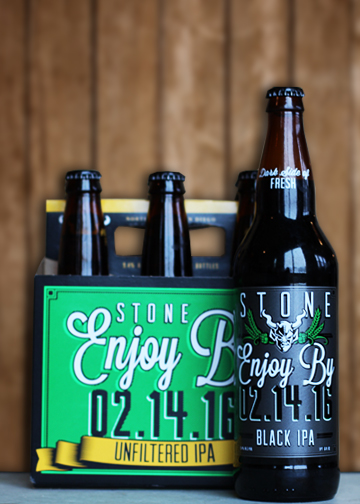
Like many of you, I was always told the best beer is a fresh beer, and mostly this is true. Take this ‘Enjoy By IPA’ for example.

Enjoy

Stone brewing is so adamant this beer—bottled on 1.10.16—be drunk fresh, they named the thing after its drink by date then planted ENJOY BY 2.14.16 right on the label. Why stress freshness? Because it’s a hoppy beer.

Hop compounds, just weeks after a beer is bottled, begin to deteriorate, which means so do the citrusy, bitter, and floral notes so prominent in delicious IPAs. So with any hop heavy beer, time is the enemy. That’s why IPAs should, with few exceptions, be consumed fresh, and to impede the inevitable loss of character, stored cool.

Now let’s look at a much different label.

best-after-zoom-in

A best AFTER date? The shit is this? Bottled on 12.8.15, why would any brewer recommend that an entire year lapse before consumption? Because the RIGHT beer, when rested gently in a beer cellar, ages beautifully like fine wine and J. Lo.

That harsh, boozy taste commonly found in young stouts transforms into savory chocolate and toffee. Complementary flavors, once barely discernible, come forward to create new and exciting profiles. And malt monsters, once imbalanced and one-dimensional, meld into a velvety bouquet of such complexity that I would drink that shit off the floor of a Wal Mart bathroom.

Of course, to attain these awesome results, you can’t just toss a 30 rack of Busch in a closet and keep the door shut for a year. First, you need the right beer.

How to Determine a Beer’s Cellaring Potential

Beer, when exposed to time, must withstand a litany of chemical reactions, one of which is oxidation.

Oxidation, an oxygen based reaction resulting in the change of flavor, is always occurring in beer. While certainly responsible for its share of unfavorable results—like the degradation of hop compounds—oxidation can create some absolutely delicious flavors when it reacts with the right beer. But if you age some feeble-bodied lager, oxidation will eat him alive. Only the strongest, fullest, biggest dick-swinging beers can survive the cellar. Here’s what it takes:

1. High alcohol content (8% ABV and up). The aging beer mustn’t be rushed. The chemical reactions responsible for flavor improvement take time. Alcohol, acting as a preservative, regulates the process, moving things along at just the right pace.

2. Lots of malt. Malt is the lifeblood of beer; it’s the processed grain that supplies the sugars which the yeast converts to alcohol. A beer with a big malt profile outlasts the yeast, resulting in residual sugars after fermentation. Another negative effect of oxidation is that it causes beer to thin. These leftover sugars battle oxidation during aging, allowing beer to sustain its full body.

3. Dark color. Before reacting with yeast to create alcohol, malt begins as raw grain. Grain only becomes malt after undergoing a process called malting (makes sense). Kilning, a step in the malting process, heats the grain and stops germination. When kilned at a high enough temperature, the grains actually become roasted. Roasted malt gives dark beer its dark color and usually is a sign of big, rich flavor (think dark roast coffee), and these flavors age well. Now, not all dark beers belong in the cellar, but a big roasted malt profile is usually a good sign.

The Very Best Beer Styles For Your Cellar

Imperial Stout

Imperial

Imperial (extra strong) stouts go big on everything—roasted malt, sweetness and alcohol included. With so many delicious options, availability and variety make stout my favorite cellar beer.

Aging qualifications

  • Big roasted malt bill
  • Plenty of residual sugars
  • High ABV

Aging profile

  • Roasted malt creates sherry and caramel flavors
  • Dark chocolate notes develop
  • Boozy flavor mellows

Recommended aging period

  • 1-2 years

English barley wine

idiot

Patrick Dawson, in his phenomenal book Vintage Beer, calls English barley wine “the grandaddy of all vintage beers.” Intended to be cellared, these beers are brewed to maximize the benefits of aging.

Aging qualifications

  • Big on both malt and alcohol
  • Plenty of residual sugar
  • Built to age

Aging profile

  • Toffee and caramel flavors develop
  • Boozy flavor mellows
  • Fruit and candied notes emerge

Recommended aging period

  • 4-8 years

American barley wine

Bigfoot

The American barley wine is generally hoppier than the English version but is also cheaper, easier to find, and still a great cellaring candidate.

Aging qualifications

  • Available and inexpensive
  • High ABV
  • Big malt profile

Aging profile

  • Melds over time, improving complexity
  • Boozy flavor mellows
  • Sherry notes develop

Recommended aging period

  • 1-3 years

Sour

folie

If you have yet to experience the funk of a sour beer, you certainly should. With so many big, bold flavors, a stint in the cellar creates the perfect complexity.

Aging qualifications

  • High acidity acts as a preservative
  • High in residual sugars

Aging profile

  • Sweetness develops to complement sourness
  • Acidity mellows increasing complexity
  • Toffee and caramel flavors develop

Recommended aging period

  • 1-3 years

Start Today: 5 Beers You Can Buy Right Now

Many cellar-worthy beers are hard to find. The Abyss (the beer with the best after date) is offered in limited quantities. The bottle shop I frequent sold out within hours. Since this kind of exclusivity won’t do the startup beer cellarer any good, here now are 5 beers that I have purchased in the last 2 months and that would make an excellent foundation for any new cellar.

Note: I did my shopping in December and January in Minnesota, so availability may be subject to season and region. But like I said, I didn’t have to wait in line, or get on a list, or mug some poor sap in a parking lot to obtain a bottle.

cellarbeer

How to Create a Beer Cellar

With your shopping done, it’s time to cellar your beer! You’ve probably realized from my blanketed abomination pictured above that starting a beer cellar requires very little. In all likelihood, the perfect cellar is somewhere in your house right now, waiting to be stocked with delicious beer. How exciting! All you need is an area with these 3 basic (but important) characteristics:

1. Cool and consistent temperature. Beer and heat don’t mix, and storing beer too cold, like in a refrigerator, impedes the aging process. Target an area close to the ideal cellar temperature of 55℉.

My cellar, in an unfinished basement, hovers between 54 degrees in the winter and 60 in the summer. This small change over six months is nothing to worry about, but do avoid subjecting beer to frequent and aggressive temperature fluctuation.

2. Away from sunlight, or bright fluorescent lighting, or any other lighting for that matter. The only thing beer hates more than heat is light—light being the culprit of skunked beer. While my basement stays cool, it gets a lot of sun, hence the ultra high-tech, UV-blocking Blues blanket.

3. Enough space to store beer upright. Wine is cellared horizontally to keep the cork moist and prevent oxygen from entering the bottle. Beer, regardless if it’s corked or capped, should be stored vertically so yeast sediments settle to the bottom of the bottle.

Now What? How to Get the Most From Your Beer Cellar

Serve at cellar temperature or slightly chilled. If served too cold, you’ll miss out on the big flavors and complexity.

Track your cellar. The bigger your cellar becomes the harder it is to track, and certainly you don’t want to forget about anything. I use google docs, so I can take inventory at a glance, and because I am a compulsive prude. Here now is example 1A.

Screen Shot 2016-02-26 at 5.35.37 PM


Read labels. Brewers know best. Cellaring and serving recommendations are often right on the label.

Join a forum. Want a general idea as to how a certain beer will age? Let someone experiment for you. The aging forum on BeerAdvocate is a great place to start.

Try a vertical. Recently I participated in a four year vertical tasting (same beer, different ages) of Goose Island Bourbon County Stout and then instagrammed photographic proof, informing all the world of my coolness. Anyway, a vertical is the best way to experience the true effect of aging on a beer. It just takes a few years to assemble.

IMG_5839

Share with friends. Invite a buddy over. You can inundate him with details on the beer’s characteristics and how you acquired it. Then let him take a sip while you watch eagerly for his approval. Sooo, Greg, whaddya think? Good, right?

How to Visit Your Buddy’s Newborn Baby

If you’re in your late twenties, then you already know…babies…they’re everywhere…

Your neighbor has one. Your coworker has one. Every person on your goddamn Facebook news feed has one, and by God, soon one of your buddies will have one.

What will you do? Should you call? Should you visit the hospital? Should you buy the baby a rattle? A lolli?

Oh good Christ, are you expected to hold this baby?! Babies are fragile. What if you drop him? Or crush him? You’ll smash his bones, you will.

Remember all those weddings last summer? Babies come next. Babies are the thing now. A big thing. But just relax. Take a breath. And take four minutes to learn all there is to know about visiting a newborn.

Express interest in seeing the child. Don’t make your buddy BEG you to see his kid. Even if you’re not big on babies, congratulate him on his major milestone and express interest in seeing his baby, once he and the new mother are ready.

Be patient and flexible. The labor and delivery experience is a lot of things (emotional, terrifying, bloody). One thing it is not, however, is something to share with a shit ton of visitors. Unless you have prior arrangements, leave the hospital visits to immediate family. And since even the first few days back home are spent adjusting to, well, everything, let the new parents schedule the visit.

Be healthy. If you have a cold, don’t go rubbing up on the new babes, man. Exposing a baby to a virus is dangerous, for both of you. For him because his immune system isn’t at full power yet, and for you because if you get this kid sick, his hormonal new mother might just carve your eyes from their sockets.

Bring a gift. If you’re a single guy, then bringing a gift probably seems reasonable. If you’re married, and this gift is in addition to a shower gift or pregnancy gift or any many other gifts your wife has likely already given the child and/or soon-to-be mother, this gift will seem like overkill.

Earlier this year, I protested the ‘baby visit gift’ when my wife wrapped what was, I swear to God, the tenth item we had given to the child of two friends of ours. My wife’s response was, when friends have a baby, you bring a gift; it’s what you do.

And to her credit, of the many visitors we had after our girl was born, all of them brought gifts. Every single one. So if you decide that you’ve already given enough, I concur, but you’ll probably look bad by comparison.

Anyway, if you’re not up to date on the latest baby stuff, why not bring something for the new parents? A buddy of mine brought my wife a bottle a cab and me some bourbon. Well done, Greg. Because of you, I remember nothing from my first week of fatherhood.

Bring (homemade) food. Wanna hear about the best enchiladas I’ve ever had? No? Well too bad.

So my wife’s labor lasted three days, and we spent two more in postpartum. During this five day birthing marathon, my food options were a) the hospital cafeteria and b) Davanni’s across the street.

The hospital cafeteria cuisine was everything you’d expect hospital cafeteria cuisine to be, so by default I was stuck with some variety of spicy lunch meat hoagie from Davanni’s. Twice a day. Everyday. By the time we were finally discharged, I had acquired a baby girl, ten pounds, and type 2 diabetes.

Upon returning home, our first visitors brought with them two pans of homemade enchiladas and OMFG. Seriously, preparing a meal as a new parent is the worst. It requires time, energy and the willingness to create and clean another mess. To have someone cook for you…it’s magic. Those enchiladas changed my life; they must be commemorated and eternalized. I shall name my daughter after them.

Expect a newborn. If you arrive expecting the goddamn Gerber baby, then you are going to be puzzled because a newborn looks nothing like the giggling infants used to peddle baby food. His entire 7 pound body was just forced from a birth canal, and it shows. His head is misshaped. He has no neck, and his swollen face looks like it just collided with Holly Holm’s left foot. When my daughter was born I had no idea newborns looked like this. Prepare yourself.

Wash your hands. Again, to keep the vulnerable baby healthy.

Hold the child. My advice to the guy horrified of baby holding: just hold the damn child. While wrapping your blundering man hands around a precious newborn may seem borderline negligent, babies are tougher than you think. More importantly, it’s easy. Here’s your guide:

How to Hold a Baby

Help out. My daughter was born twenty days early. At that point, my ‘before baby to-do list’ was about 80% complete. Any item that was unchecked on her birthday…still unchecked today. A newborn demands a shocking amount of time. You can’t prepare for it. So ask your buddy if you can help with something. Anything.

Keep it short. One of the biggest challenges as a new parent is establishing and adhering to any sort of schedule. In the early days, baby eats every 1-3 hours, sleeps (or doesn’t) whenever he wants, and pisses and shits himself seemingly on a continuous loop. Ten minutes after you satisfy all baby’s basic survival needs, the cycle resets and you do it all again. When you visit, the new family will be right in the middle of this bullshit. Don’t overstay your welcome.

How To Survive The First Week of Fatherhood

Being a dad is one of life’s rare treasures, a milestone man cherishes alongside losing his virginity, getting married, and the day he discovers masturbation. And while having many weeks to attain this level of greatness, the first week of fatherhood is as good as none of these things. In fact, it’s much worse.

Your child is a crying, crapping ball of mystery. Your poor wife — having cooked this kid to 8 pounds and then forcing it from her vagina — is understandably not yet herself, and the trained medical professionals are back at the hospital, leaving you, the alpha male of this newly formed pack, spiraling through one nonstop holy shit moment.

Holy shit, what am I doing? Holy shit, my life is over. Holy shit, I’m the world’s worst father.

Of course, it doesn’t have to be this way. And could I take the responsible dad brain I have now and go back to that week, I would do things much differently. What follows is everything I wish I knew before fatherhood. My hope is it allows you to start off being a dad who is the shit, instead of one holy shitting his pants.

Get Your Mind Right: Caring for Yourself

Fatherhood

A new family operates like a three person conga line. As the leader, baby does as he pleases, while you and your wife cling helplessly behind. You’ll be tempted to quit, to leave the conga-ing to your wife and baby. But they need you, and the best way to care for them is to first care for yourself.

Take time off. Never was my job more insignificant than during the first weeks of fatherhood. As it turns out, there is a biological reason for this. Researcher Anne Storey discovered that a man’s testosterone drops by as much as 1/3 after the birth of his child, which means a new father is wired to settle down at home. Take some time to be with your new family.

Know there is no right way to feel. 25-40% of new fathers report feelings of indifference after the birth of their child, while other dads cry tears of joy in the delivery room. This is a major life event. You’ll respond in your own way and that’s okay. Stay involved, work on the bonding techniques we’ll cover shortly, and soon the love for your child will hit you. And when it does, be ready…

Prepare for new and extreme emotions. The affection for your wife, the love from your dog, that night you drank a bottle of Merlot and cried through the ending of The Notebook — no emotional experience prepares you for fatherhood.

The feelings for your child are disarming; they tear away your tough guy layers like peels of an onion. And at a time when you want to feel responsible and in-control, it’s more likely you’ll feel helpless and vulnerable. You might worry.

Don’t worry, be happy. When we love something worrying comes naturally, especially something as fragile as a newborn. And while every new parent worries, remember this:

In the history of human existence, never has there been a safer time for your baby to be alive.

For thousands of years, babies were raised in caves, holes, huts, without electricity, and without modern medicine. Hell, they’re still raised this way. Learn about newborn safety, take precautions, but most importantly know what to look for.

Know the newborn warning signs. Call your health care provider if your baby experiences:

  • yellow skin or eyes
  • blueish or pale skin
  • a fever (rectal temperature above 100.4 F)
  • redness or infection around the umbilical cord or circumcised penis
  • stiff or floppy limbs
  • no stool for 48 hours or blood/mucus in the stool
  • repeated vomiting
  • drastic behavior changes

Stock the house with healthy food. A nutritious diet gives you the energy necessary to keep up with baby. More importantly, healthy food will speed your wife’s recovery and replenish the baby’s nutrients if breastfeeding. Pediatricians recommend a natural diet including lean protein, leafy green vegetables, and fruit.

Embrace abstinence. After birth, the default recommendation is no sex for six weeks. During this time, your wife will be inundated with new priorities all more important than your sexual gratification. Plan to be on your own, and even that may be a challenge. With mom and baby home and a revolving door of visitors, it’s not like you can set up PornHub headquarters in your living room and go to town whenever inspiration strikes. You’ll need to get creative.

Ask for help. Not necessarily with the abstinence part but for everything else. Adjusting to life with a baby is tough. Don’t be afraid to ask for help.

Your First Priority: Caring For Your Wife

fatherhood

Take a woman having just delivered a baby, sign her up for fulltime newborn care, and you will have one new mother who needs your help. A good start is to understand the aftermath of labor.

Physical Aftermath

Lochia is the bleeding from the site where the placenta was attached. It lasts about 3-6 weeks.

Uterine contractions feel like menstrual cramps and cause the uterus to shrink back to its normal size.

Physical damage along the birth canal. A baby was just born through a vagina. General soreness is common throughout the area, its supporting structures, and the muscles of the pelvic floor.

Hemorrhoids are common throughout pregnancy and even more so right after labor. Basically, the pressure from pushing results in swollen blood vessels of the rectum. Yup.

Engorgement typically occurs 3-4 days postpartum and is caused by increased blood flow to the breasts, swelling, and accumulation of milk. The pain can range from mild discomfort to intense and throbbing.

Cesarean section recovery requires extra care.

Emotional Aftermath

The baby blues affect about 70% of new mothers and can last hours, days or even weeks after birth. During this time, your wife may experience periods of weepiness, sadness, irritability, and anxiety, so, really, nothing you’re not already used to. Just be extra sensitive and know it will most likely be short lived.

Postpartum depression is a longer lasting, more intense, and much more serious bout of the baby blues. If your wife is experiencing the following symptoms more than 2 weeks after birth, it may be time to call your doctor.

  • Feeling empty
  • Lack of energy
  • Lack of interest
  • Significant changes in appetite

Though commonly believed to be a result of a new mother’s changing hormones, some researchers associate the baby blues with low levels of social support — specifically from the new father. This, of course, means you can improve what was previously believed to be a hormonal and uncontrollable phenomenon. And while there are many ways to help your wife, the most surprising and maybe most important is with breastfeeding.

Wifey’s Little Helper: Breastfeeding Assistant

Breastfeeding is often the most unpleasant of afterbirth surprises. It takes about 10 seconds to realize that your preconceived notions — mom offers teet, baby accepts teet, baby drinks milk for like 10 minutes, mom burps baby, everyone is happy — were absolutely asinine. At best, nursing grinds along as mom and baby coordinate supply and demand. At worst, it doesn’t work.

Adding further stress, most experts believe breastfeeding is critical to newborn development. Research shows that breastfed babies score higher on cognitive tests than those fed formula. Breast milk also contains ingredients like Taurine, an amino acid that a baby’s brain needs but cannot make on its own. Because of these and other benefits, John Medina, in his book Brain Rules for Baby, refers to breast milk as “The nutritional equivalent of a magic bullet.”

The difficulty of breastfeeding and potential of baby missing out on the benefits of breast milk can put a lot of pressure on a new mom. By doing just two things, you will vastly improve the feeding experience.

1. Educate yourself. Read the guides you received from the hospital, birthing classes and prenatal visits. Learn about latch, feeding positions, and supply issues. Serve as a consultant and help your wife troubleshoot. Stay involved and be supportive when things aren’t going well.

2. Burp and change diapers. The average newborn feeds every 2 hours. After eating, baby needs to burp and has most likely shit himself or will shit himself shortly. If you burp and change baby, your wife will have a few extra minutes before the next feed.

Wifey’s Little Helper: Other Responsibilities

Assume your wife’s old chores. Over the years, you and your wife have honed a systematic division of chores. You maintain the yard while she cleans the house. She cooks while you walk Spot. This is over, and you will now do all of these things. Baby monopolizes your wife’s time because babies don’t care about chores. Baby will say to hell with chore division, and then cry about it, and shit his pants.

Cook that healthy food. The FDA recommends that nursing mothers consume an extra 500 calories a day. Since a nursing mother is so often, well, nursing, you might have to step up your cooking game.

Regulate visitors. People love babies, man. Never is this more obvious than during the first week of parenthood. Visitors will line up, clamoring to get their paws on your child. If you’re not careful, you’ll be hosting house guests all the time. Don’t overbook and schedule visits based on baby’s feeding and sleeping schedule. Also, ask visitors to wash their hands before rubbing up on your child.

Keep the new mom off the internet. Parenthood is filled with questions, none of which is more common than Is this normal? Take this question online, and you will get 100 different answers. All unfavorable. Baby blogs and mommy forums are packed with hormonal new mothers scaring the collective shit out of each other. Google baby runny nose and I promise, if you look hard enough, you can diagnose it as a terminal illness. The web builds on inaccuracies like a schoolyard game of telephone. For at least the first week, skip the drama and call the pediatrician with any concerns.

Beginning to Bond: Taking Care of Jr.

new-dad

In the 1950s, scientist Harry Harlow performed a heartbreaking but important experiment on infant attachment using newborn rhesus monkeys. He separated the monkeys from their biological mothers and placed them in cages with two dolls.

The first doll was made of wire and supplied food to the babies through an attached bottle of milk. The second doll provided no food and was made of soft cloth. Harlow then ran a series of tests to see which mother the baby monkeys preferred. In every variation of the experiment, the babies preferred the cloth doll to the wire doll with food.

Harlow concluded that the parent/infant relationship is built on more than just feeding, and that contact and comfort create the emotional attachment necessary for the psychological health of infants. As sad as this is for the monkeys, it’s a welcome discovery for a new father looking to bond but unable to produce breast milk.

Harry-harlow_wiki

Start now. I’m gonna assume you had this kid for the father/daughter or father/son relationship and not because you wanted to change diapers and never fuckin sleep again. And while baby is too young to go to his first ball game, you don’t have to wait two years to start bonding. Here are some activities that, if started right away, can lay the foundation for a lifetime bond. Almost like little bonding hacks.

Provide skin to skin contact. Touch is vital for baby’s development. Research has shown that skin to skin contact comforts baby and can regulate his temperature, breathing, and heart rate.

Get close and make eye contact. A baby sees up to 12 inches and is especially intrigued by faces. If you’re consistently within his range of sight, he’ll become familiar with your features. Soon the day will come when he recognizes you. That will be a good day.

Read to baby. Reading helps baby establish the building blocks of language. Since he is too young to understand reading material, read whatever is on your nightstand.

Talk to baby using “parentese”. Speak in a high pitched tone, stretch your vowels, and use a melodic voice. Because you’re slowing your speech and making your vowels more distinct, it helps baby learn the language.

Schedule daily bonding time. Habits form most easily when done at the same time, so every night as my wife gets ready for bed, I pick up my daughter, nestle her in my shirtless man sweater, and together we read one of my favorite children’s books. My hope is that we are establishing a bond that exists years from now, that soon I’ll be reading her favorites, and soon after that she’ll be reading them to me.

This is Only the Beginning: Surviving the First 3 Months

The first week of fatherhood is tough, but it is not the toughest. During the early days, the experience is fresh. You still have willpower, and adrenaline, and the blissful unawareness of what life is really like now.

When all of that shit dries up, when nothing is fresh because you’re living in filth, and when baby has slaughtered your adrenaline and willpower — that is when shit gets real.

My wife and I fondly refer to weeks 2-12 as the dark ages. Your dark ages survival guide can be found right here:

(Post coming soon)

How To Drink A Beer

You know what is awesome?

Beer is awesome. And as the craft beer craze surges through this country like a goddamn Taylor Swift tour, it has never been easier to get all hopped up on hoppy IPAs, or blackout on black lagers, or hurl up some hefeweizen. Now every nowhere town in the Midwest has a microbrewery standing alongside the customary McDonald’s and Subway. Beer has blown up.

Today, everyone is a beer drinker/enthusiast/expert. I am no exception. There is little I would rather do than flock to a beer festival and pretend to talk knowledgeably about IBUs and apricot notes. I have an opinion. You have an opinion. That guy over there barfing onto his Vans, by god, even he has an opinion.

But while opinions differ widely, there are certain standards — based on, like, science and stuff — that inarguably make beer drinking better. What follows is simple and effective — everything you need to immediately improve your beer drinking experience.

A Good Beer Starts With Storage

How to Drink a Beer

I’m a big fan of the beer fridge. I tend to mine like a garden, organizing it by row while incessantly weeding out unfavorable sampler pack remainders and my wife’s hard ciders.

One thing I never considered, though, was that this little labor of love was doing wonders for my beer. Because if stored incorrectly, beer can go bad before ever reaching your lips. Fortunately, the beer fridge fulfills the 3 rules of proper beer storage.

  1. Keep it cool
  2. Keep it dark
  3. Keep it upright

Keep it cool (not cold)

It’s like every beer commercial ever: some muscly bro snags an ICE COLD can from a cooler, pops the top, CRUSHES it, and out of nowhere summer arrives, and he is engulfed immediately and entirely by an impossible number of attractive females.

The big beer industry is tirelessly hawking the idea that an ice cold refreshment is the ticket to beaches and boobies. But while maybe acceptable for mass-produced, domestic lagers, ROCKY MOUNTAIN COLD is not the best way to store good beer.

So what is the best way? At 40° Fahrenheit. Depending on style, beer’s ideal serving temperature bounces between 45-55°. Accounting for a slight warm up when poured into a glass (more on that later), storing beer at 40° gives you a consistent serving temp of 45°.

What’s the problem with ice cold beer? A food’s temperature affects its taste because certain flavors can be activated or deactivated when heated or cooled. If something tastes good, it should be served warm enough to detect it. Over-cooling a beverage suppresses its flavor, which is why whiskey snobs will shit on your doorstep if you refrigerate good bourbon, and also why those vodka shots were so much more tolerable when the bottle of Karkov came straight from the freezer.

Is it dangerous to store beer for a long time or at high temperatures? Yes. Like most food, beer goes bad with time, however, beer won’t rot and fester like the discarded trimmings of a T-bone. Instead beer becomes stale through oxidation (an oxygen induced chemical reaction).

Oxidation occurs even when beer is refrigerated, but — like most reactions — heat expedites the process. The more exposure to high temps and time, the more your beer tastes like something other than what the brewmaster intended.

Will inconsistent temperatures skunk my beer? I was always told that once a beer is refrigerated, it must stay that way. If I removed the beer and returned it to room temperature then it was over, skunked, ruined. It turns out, this isn’t true.

A skunked beer is the result of a specific and scientific reaction, one that cannot result from the modest fluctuation between refrigerator and room temperature. Skunky beer has only one culprit: light, which is why the second rule of proper beer storage is…

Keep it Dark

To prevent skunking, we first must understand a little about beer’s genetic makeup. Warning: science below.

As you probably know, beer contains hops. Within hops are isomerizec alpha-acids. These acids, when struck by light, produce a molecule called 3-methyl-2-bulene-1-thiol, which is almost identical to the contents of skunk spray. So a lightstruck beer doesn’t just smell skunky, it is skunky.

To protect their beer from most ultraviolet wavelengths, most American craft brewers bottle using brown glass or cans. Clear and green bottles, however, are less effective in blocking sunlight. This is probably why imports like Stella and Heineken are always skunky — they can’t make it from the Rhineland to the Promised Land without getting light struck.

Be safe. Store your beer out of the sun and away from excessive fluorescent lighting. Like in a cool, dark beer fridge.

Keep it Upright

When on its side, beer is at an increased risk of oxidation as more of the liquid is in direct contact with oxygen. Upright storage minimizes this risk, reducing the beer in contact to only that at the top of the bottleneck. Another benefit to upright storage is that all the yeast sediments settle to the bottom of the bottle, allowing for a nice, clean pour…

Pour Beer Into A Glass

With a fresh, cool, unskunked beer resting upright and deliciously in your beer fridge, it is now time to drink it. But not before pouring it into a glass.

Why should I pour beer into a glass? Drinking beer from a glass invites more of your senses into the party. Now, in addition to taste, you have touch (the physical pouring from bottle to glass), sight (the color, consistency and head as seen through the beer glass), and most importantly smell (the exploding aroma of malt, hops and fruity esters made possible by getting your nose right up in there). Also, pouring activates carbonation, releasing the beer’s aromatics while inducing a foam ‘head’. This head serves as a net, retaining those lovely tastes and scents.

What if I don’t give a shit about ‘smelling’ my beer? Fair question. It wasn’t long ago that I shared this apathy. But once I understood the relationship between taste and smell, I changed my mind.

What we commonly perceive as taste is actually flavor, or the combination of taste and smell.  Our mouths can discern five basic tastes (sweet, sour, salty, bitter, and savory). All flavors that fall outside this range are detected by our nose. So while taste is limited to 5 profiles, our nose can detect thousands of scents.

Though heavily debated, it is estimated that up to 90% of all flavor perception is governed by smell. A beer has way too much flavor to go to waste inside a bottleneck.

How do I pour a beer? To attain the desired 1.5 inches of head, pour the beer in two 6oz stages:

Stage 1: At 45 degrees down the side of the glass.

Stage 2: At 90 degrees down the center of the glass.

Or like so:

How to Pour A Beer

What makes a good beer glass? A few years ago CEO of Sam Adams Jim Koch spent many months and lord knows how many hundreds of thousands of dollars researching and engineering the perfect beer glass. Here is a glittered up blueprint — probably created by marketing — but which outlines the glass’ objectives.

samadamsglass

Now, if you want to go buck wild over glassware, tailor the glass to the type of beer being drunk from it. But if you just want an all purpose beer mug and don’t have your own superior research (you don’t), I’d find one similar to the Boston Lager Pint.

My glass of choice is this tulip from Bell’s. Notice the narrow top, outward turned lip, and generally rounded shape. Also notice it is classy as shit.

How To Drink A Beer

How should I care for my beer glass?  Keep it beer exclusive. Prohibiting access to juice, wine, your roommate’s chocolate milk, and other foam-killing contaminants ensures a clean pour and head retention. Even soap residue can kill head, so give the glass a quick rinse right before pouring, and you are finally ready to…

Drink Up

You’ve done some great work, and since even one sip of beer triggers the release of your brain’s feel good chemical dopamine, you should have no problem enjoying the fruits of your labor. And since this dopamine release occurs in your brain’s reward center, you should also have no problem going back for another, and another…and another.

Newsletter

Sign up for our weekly newsletter and receive pipin’ hot content delivered directly to your inbox. Upcoming posts include The 10 Commandments of Driving Etiquette and 9 Things Every Guy Should Know About the Female Brain. Join today!